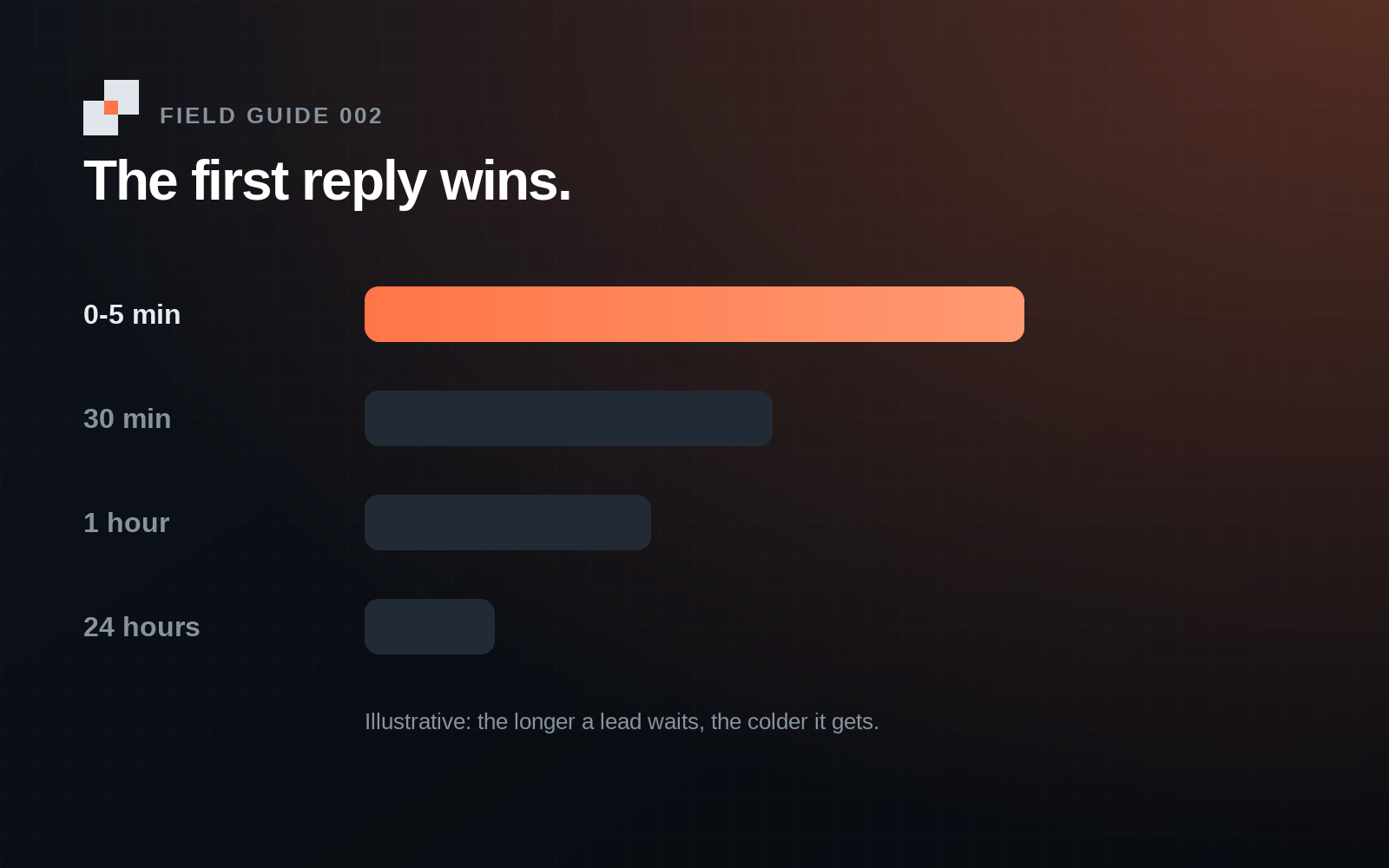
Win the job in the first five minutes.
Why the speed of your first reply decides who gets the job, and a practical plan to answer every new lead in minutes.
Read the guideFANDS FIELD GUIDE 007 · 6 MIN READ
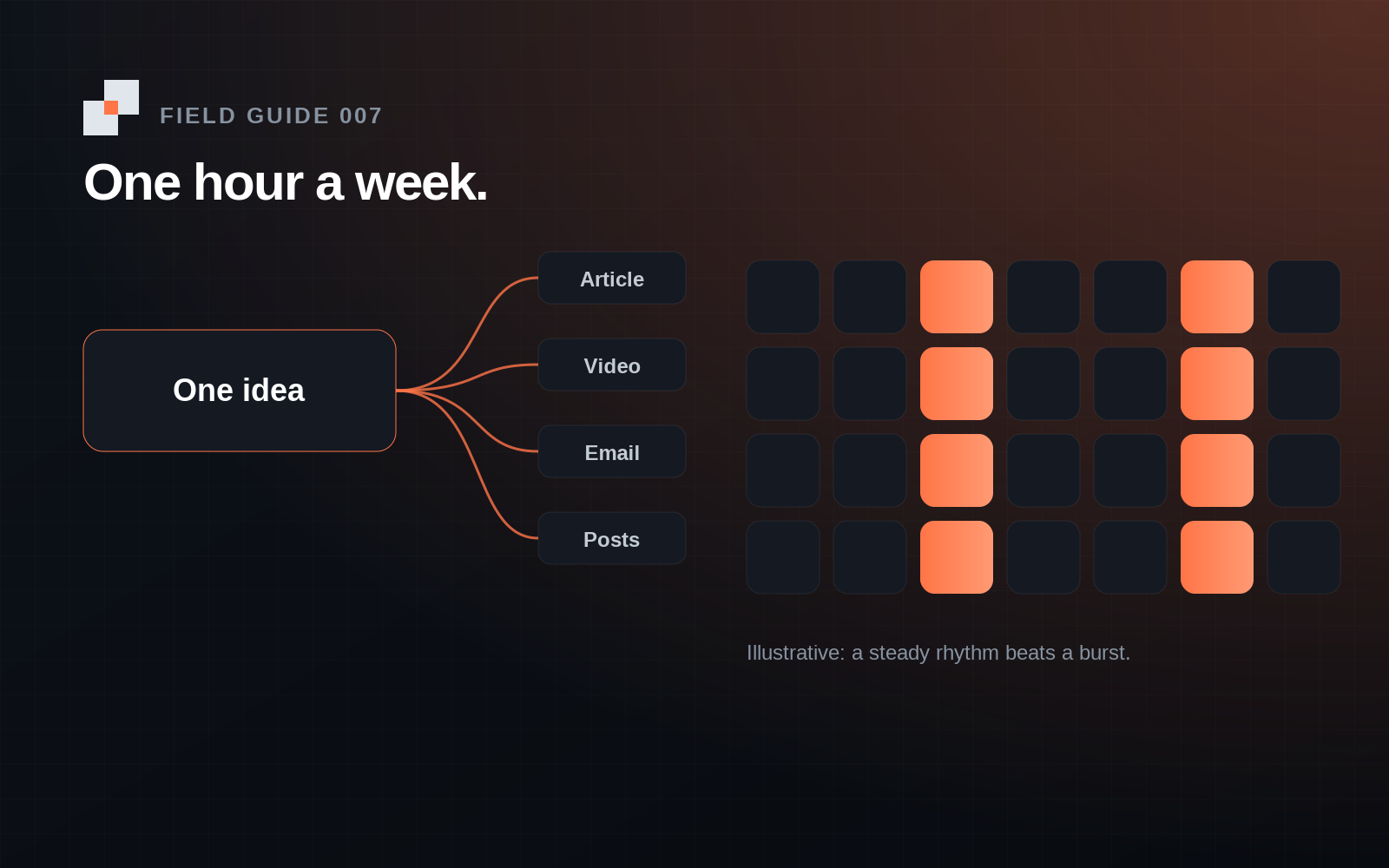
You do not need to write all day to stay visible. You need one good idea a week and a system that turns it into everything else.
Most small businesses know they should post. Most stop after three weeks. The reason is rarely a lack of ideas. It is that every piece of content starts from a blank page and takes an hour of someone who is also running the business.
The fix is to change the unit of work. Instead of writing five separate things, you produce one real idea each week and turn it into five formats.
Take a question a customer asked this week, a job you finished, or an opinion you hold. Record two minutes on your phone explaining it. From that single source:
AI does the drafting and reformatting. You supply the idea and the judgment.
| Day | Task | Who | Time |
|---|---|---|---|
| Monday | Pick the idea and record two minutes | You | 10 min |
| Tuesday | Drafts of the article, email and posts | AI | automatic |
| Wednesday | Edit for accuracy and voice, approve | You | 30 min |
| Thursday | Schedule across channels | AI and a template | automatic |
| Friday | Check what worked, note next week's idea | You | 10 min |
The human parts are short and they are the parts that matter: the idea and the edit.
Generic AI writing is the biggest risk. It sounds like everyone, so it persuades no one. Google's own guidance is to publish helpful, people-first content that shows real experience, however it is produced (creating helpful content). Fix the voice problem once, properly:
Pick three or four themes your customers care about, for example "what it costs and why", "how the job goes", "common mistakes" and "behind the work". Rotate through them. A pillar list removes the Monday question of what to post.
Once a month, look back at the pieces that brought real inquiries and update them. A refreshed article that already ranks and answers a common question is worth more than a new post nobody asked for. Add the new details, remove what is out of date and republish with a visible update date.
Likes are pleasant and rarely matter. Track:
Review once a month and do more of what brings the right inquiries.
Week one: voice guide and pillars. Week two: first idea and first full set. Weeks three and four: repeat, and fix what felt slow. By the end of the month you will have about four articles, four emails and a dozen posts, and a routine that fits in an hour or two a week.
Published by Fands, November 2026. Time estimates are examples; no client outcome is claimed.
Once a week on your website and email is a realistic rhythm that you can keep up for a quarter. Consistency matters more than volume.
Google says it rewards helpful, people-first content regardless of how it is produced. In practice that means a person should add real experience and check every fact before it goes out.
Start with your own website, one social channel where your customers are, and a short email list. Add more only when the routine is stable.
More field notes on putting AI to work in a small business.
Why the speed of your first reply decides who gets the job, and a practical plan to answer every new lead in minutes.
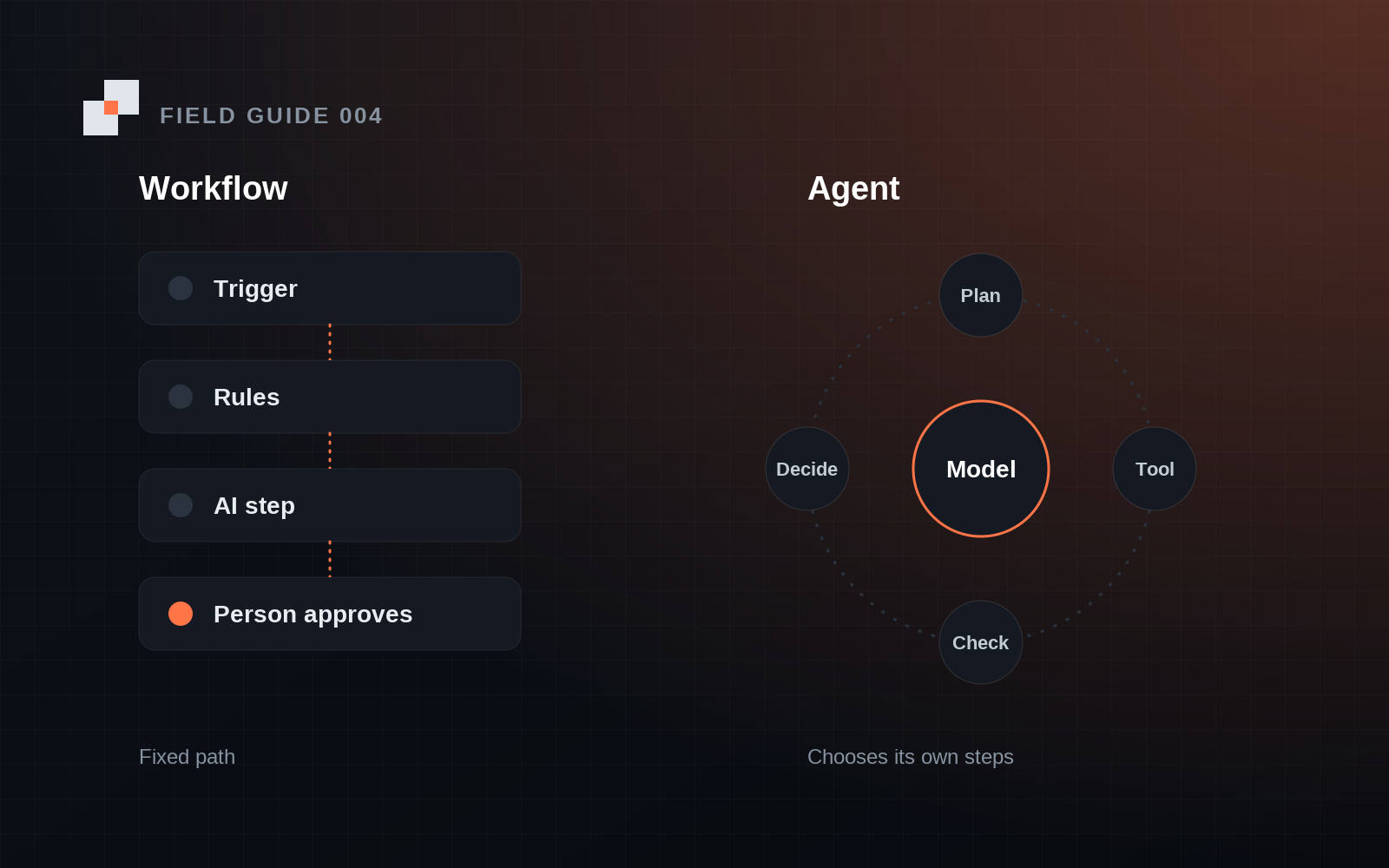
Read the guideNot every problem needs an agent. A plain-English guide to choosing between a workflow and an agent, and why simple usually wins.
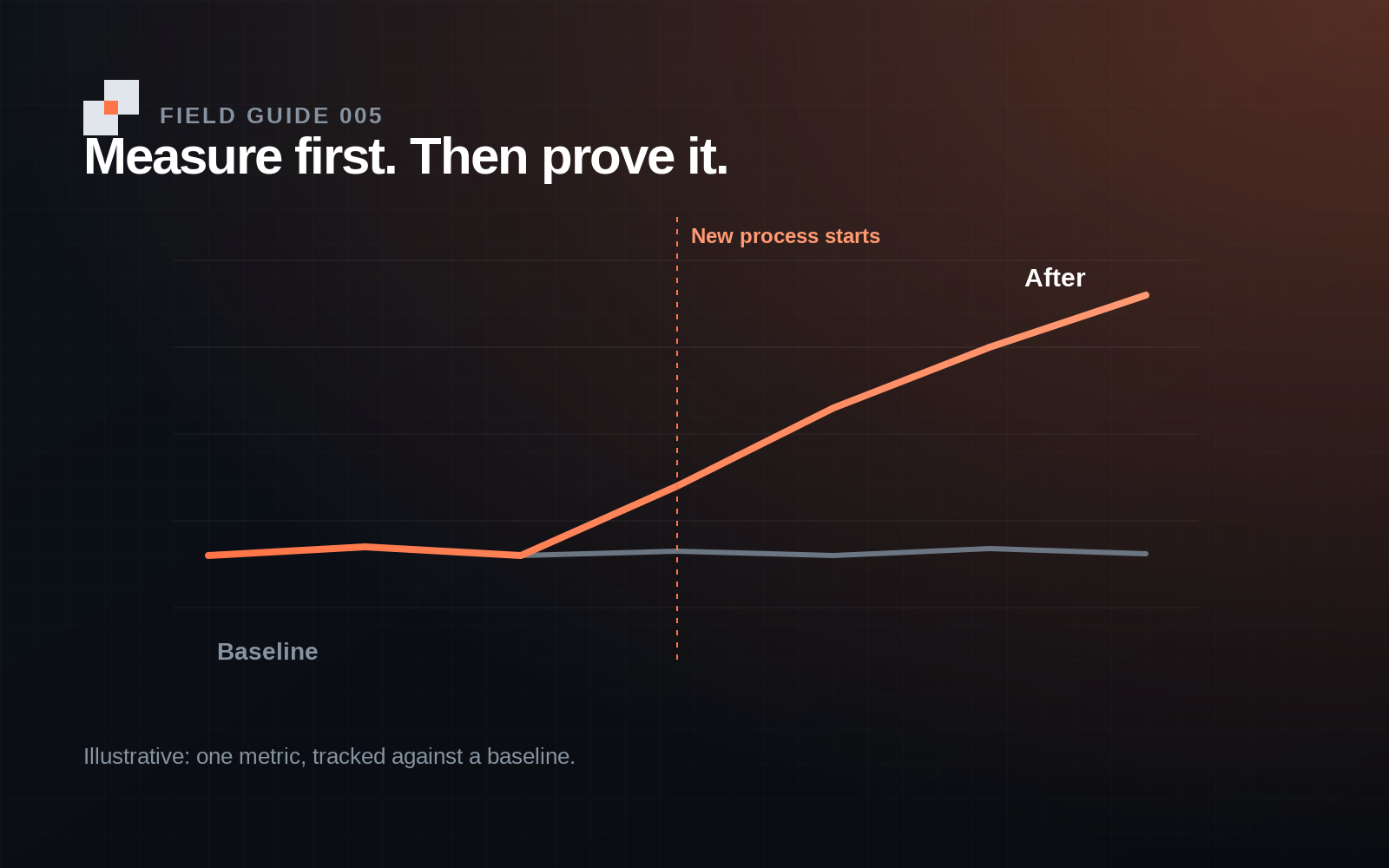
Read the guideA baseline, one metric and a monthly review. A simple method for proving that an AI project paid for itself.
Read the guideWe plan, draft and schedule a month of content in your voice.
Build my content engine