Your first AI workflow should be boring.
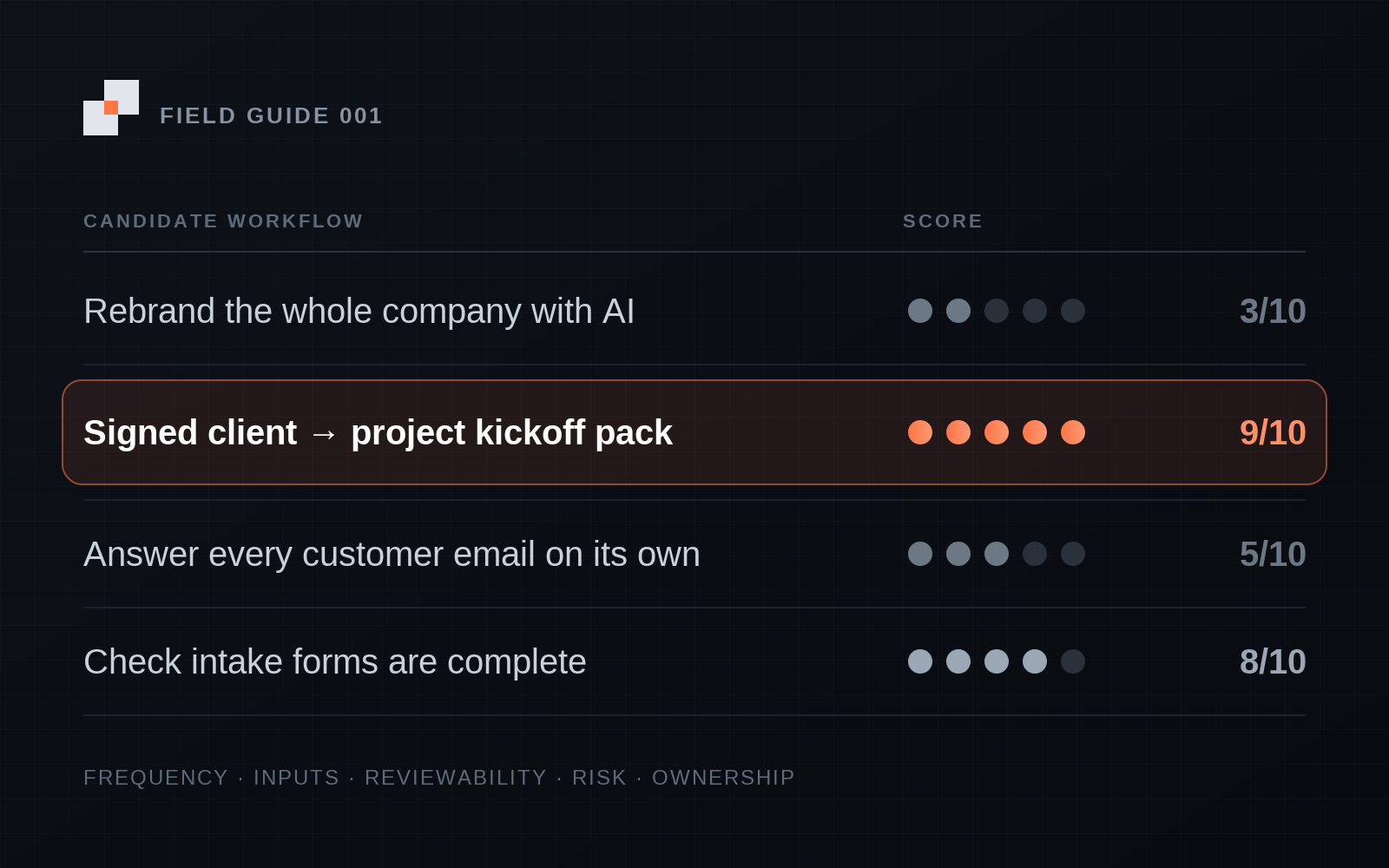
A practical scorecard for choosing your first AI project, measuring the baseline and deciding whether it earned the next step.
Read the guideFANDS FIELD GUIDE 005 · 7 MIN READ
Hours saved is not the same as money earned. Here is a method a small business can run with a spreadsheet.
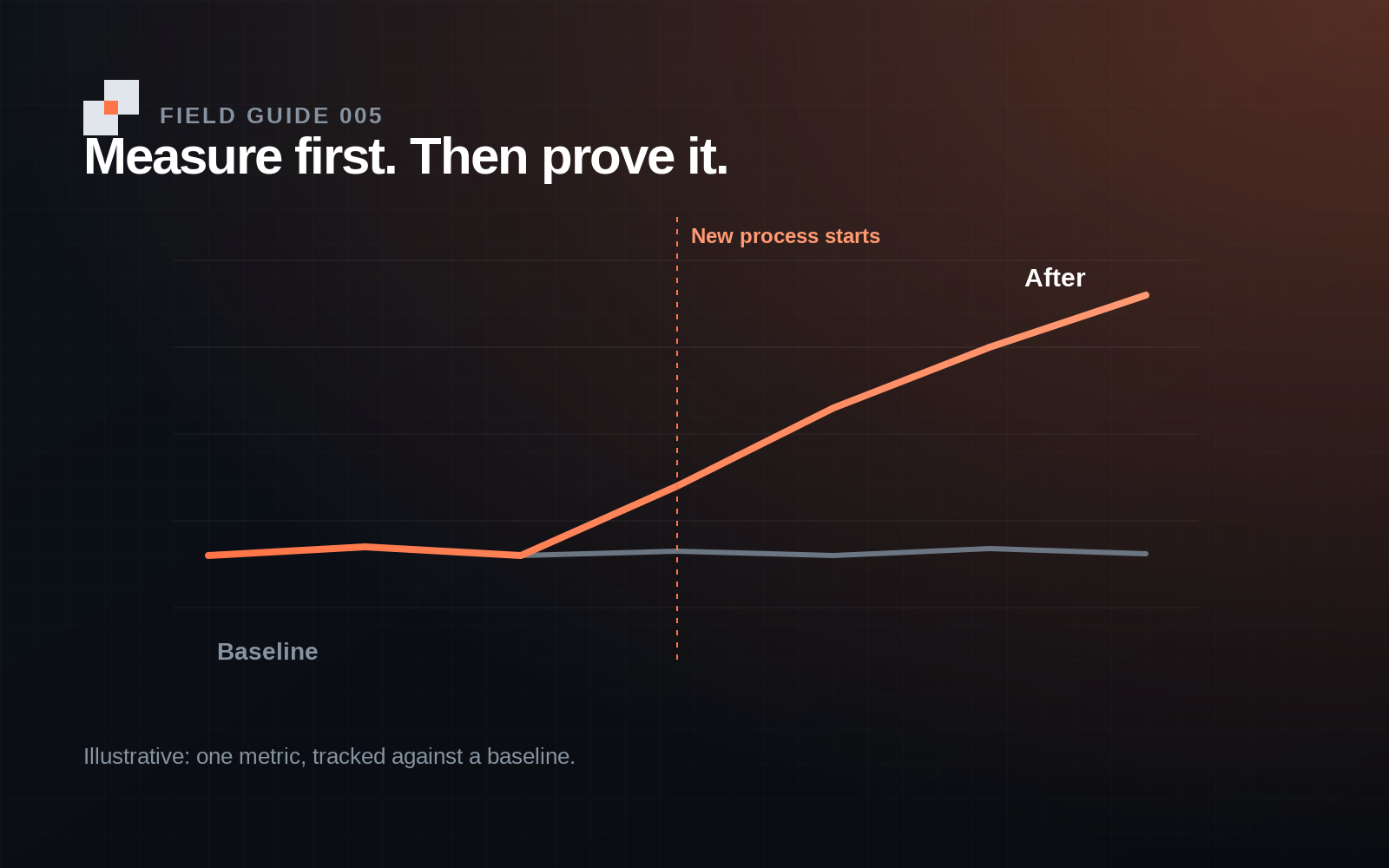
Most AI projects get judged by feeling. The team says it is faster, the owner hopes it is cheaper, and a few months later nobody can say whether it was worth it. A small business does not need a data team to fix that. It needs a baseline, one number and an honest list of costs.
Pick one process and measure it for two to four weeks, before any change. For an invoice workflow, for example: how many invoices, how many minutes of hands-on time each, how many errors, how long from arrival to payment. Without this baseline, every later claim is a guess.
Choose the single number that the project exists to move. Not five. Examples:
Agree on the target and the threshold for "success" before the build starts.
The most common mistake is counting only the subscription. Include:
Hours saved becomes cash only when a real cost changes: you avoid hiring, drop overtime, take on more work with the same team or stop paying for something. Time that is saved but not used differently is capacity, which has value, but it is not savings.
80 invoices a month x 15 minutes of hands-on time = 20 hours. If a workflow cuts that by half, gross capacity is 10 hours a month. Subtract 3 hours a month of review and maintenance, and the net is 7 hours. At a loaded cost of $40 an hour, that is $280 a month. If the build cost $2,800 and the tools cost $60 a month, the payback is around 12 to 13 months on cash alone, faster if the freed hours produce revenue.
Count errors as well as time. If a faster process doubles the number of mistakes that someone has to fix, the net gain shrinks or disappears. Track the share of cases that needed correction, and treat it as part of the metric.
Compare similar cases before and after, and report the sample size and the period. A single great week proves nothing. Include the busy periods, such as month-end, so the result holds when it counts.
A short monthly review keeps the project honest:
| Question | Where to look |
|---|---|
| Did the primary metric move against the baseline? | Your tracking sheet |
| What did it cost this month, all in? | Invoices and time log |
| What went wrong, and how often? | Exceptions list |
| Expand, adjust, maintain or stop? | Decision, written down |
You do not need to measure everything. Measure one process well, and you will learn what AI is worth in your business, which is more useful than any benchmark from someone else's company.
Read the guide to choosing a first AI workflow
Published by Fands, November 2026. The calculation is illustrative and uses assumed figures; no client outcome is claimed.
It depends on the build cost and the value of the time or revenue involved. Work it out from your own baseline: net monthly benefit divided into the one-off cost gives a payback period in months.
A measurement of how the process performs today, taken over long enough to be fair, for example hands-on minutes per invoice over a full month.
No. Time saved becomes cash only if it avoids a hire, removes overtime, lets the same team take on more work or cancels a cost. Otherwise it is capacity, which still has value but is not savings.
More field notes on putting AI to work in a small business.
A practical scorecard for choosing your first AI project, measuring the baseline and deciding whether it earned the next step.
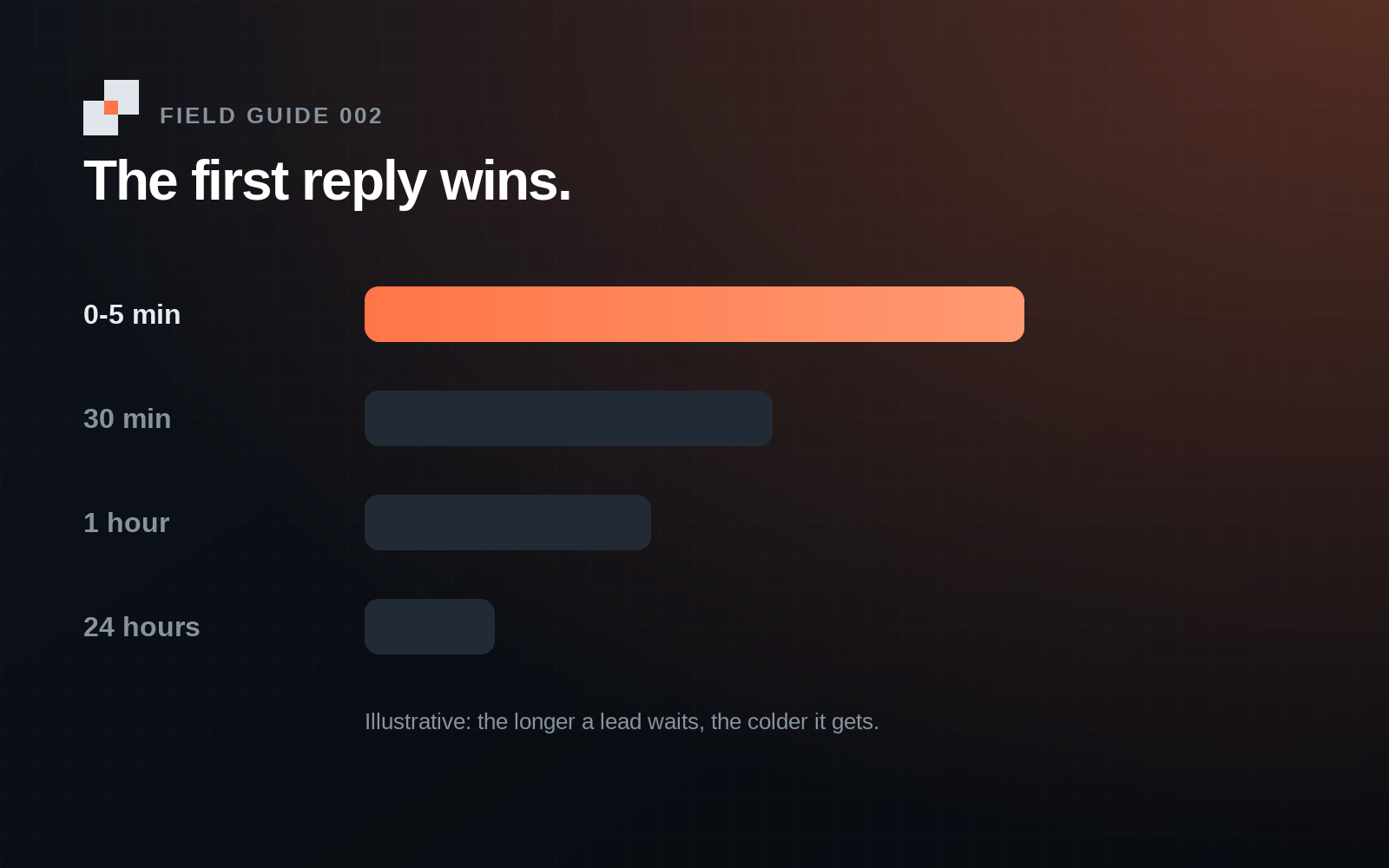
Read the guideWhy the speed of your first reply decides who gets the job, and a practical plan to answer every new lead in minutes.
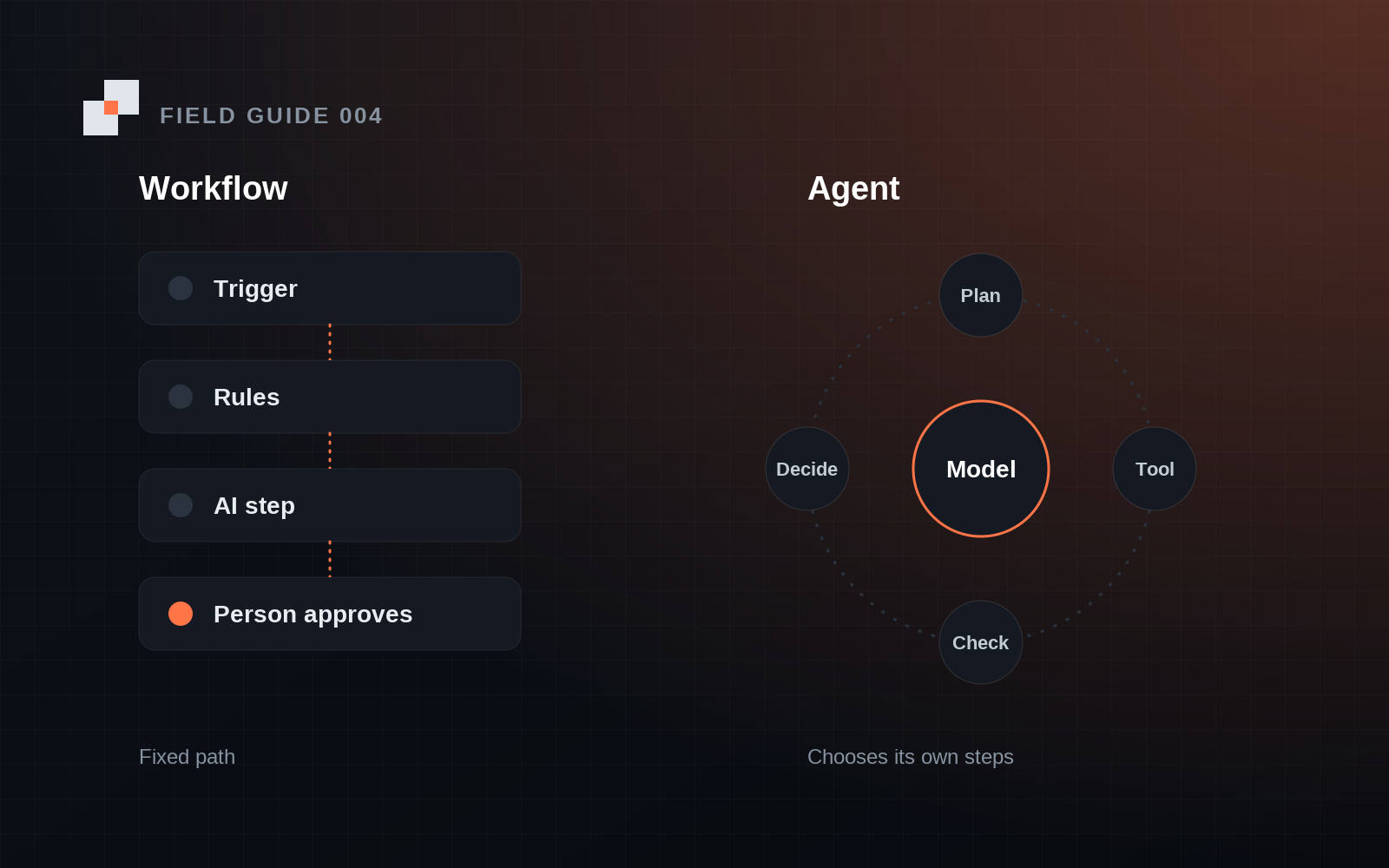
Read the guideNot every problem needs an agent. A plain-English guide to choosing between a workflow and an agent, and why simple usually wins.
Read the guideWe set the baseline before we build, so the result can be checked.
Plan my baseline