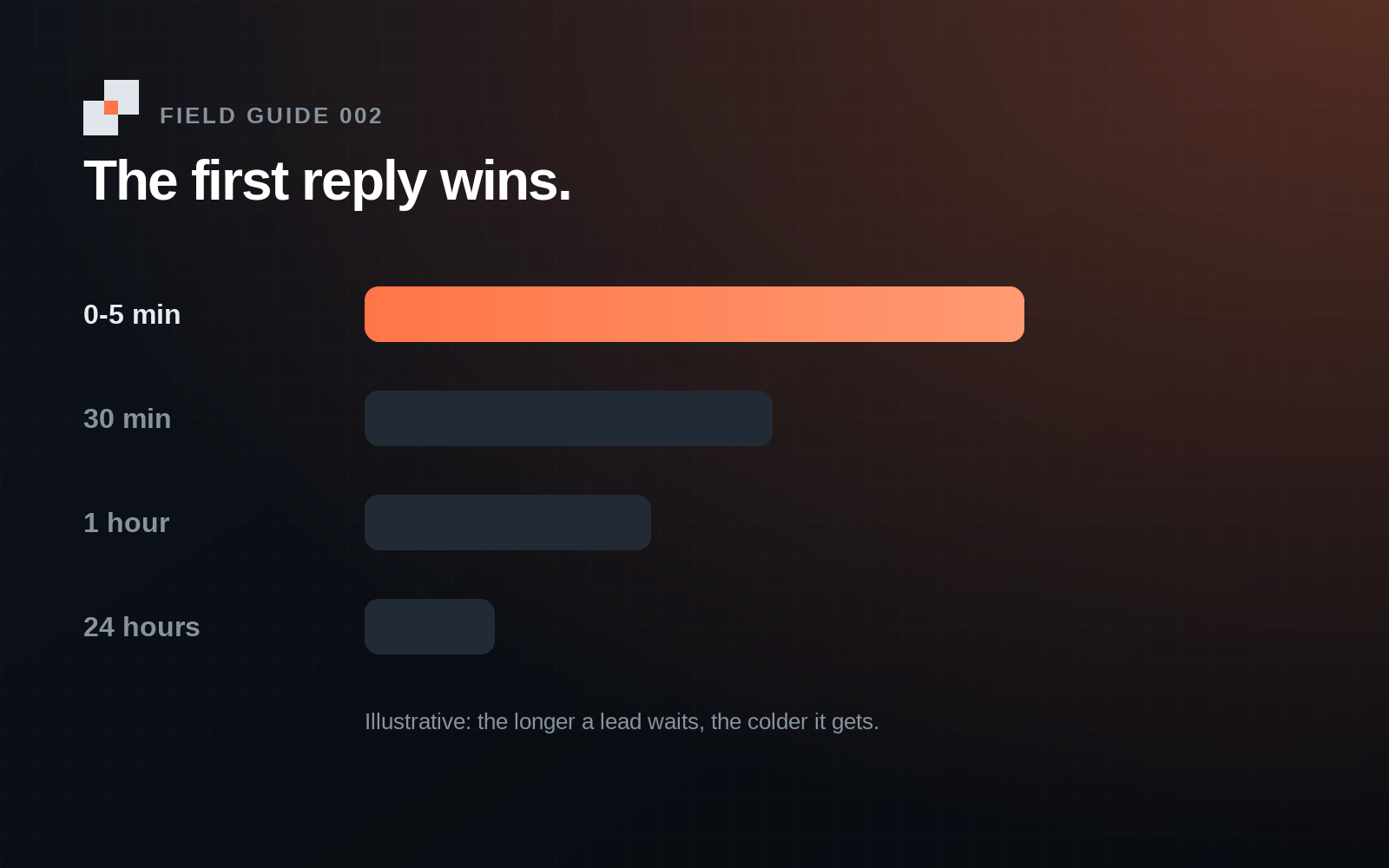
Win the job in the first five minutes.
Why the speed of your first reply decides who gets the job, and a practical plan to answer every new lead in minutes.
Read the guideFANDS FIELD GUIDE 003 · 7 MIN READ
More customers ask an assistant who to hire. A local business can improve its chances with a short list of unglamorous fixes.
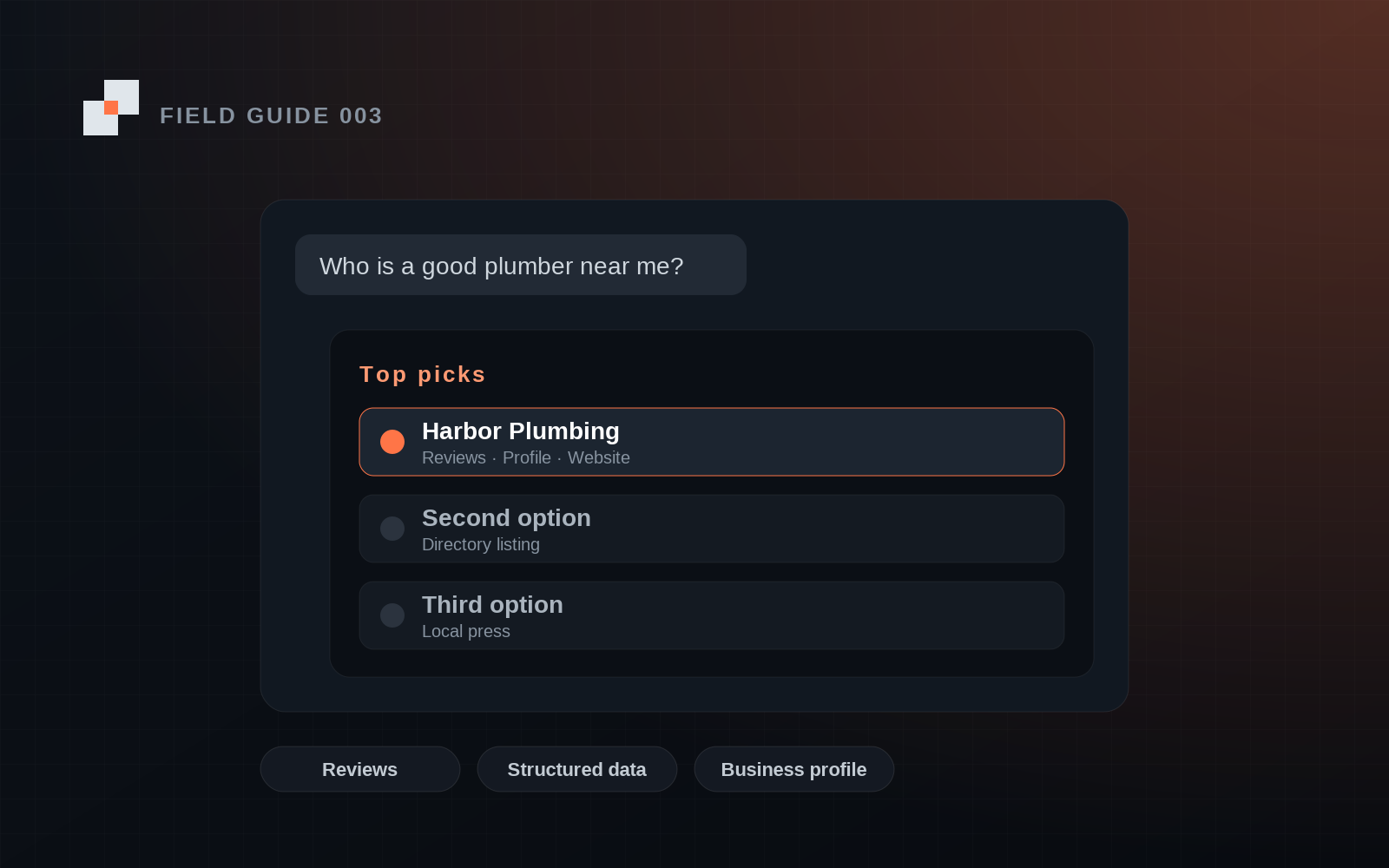
A customer used to search for a plumber, open three listings and call one. Now a growing share of them ask an assistant: "Who is a good plumber near me who does emergency calls?" The assistant answers with one to three names, and the rest of the market is invisible.
A 2026 local visibility index from the vendor SOCi, covering about 350,000 locations of 2,751 multi-location brands, reported that AI platforms recommended only a small share of locations: about 1.2% on ChatGPT and 7.4% on Perplexity, compared with about 36% appearing in Google's local pack (coverage by Search Engine Land). It is vendor data about large brands, so treat the exact numbers as direction rather than a forecast for one shop. The message is still useful: being found the old way does not guarantee being named in an AI answer.
The same research reported that the business details assistants repeat are often wrong or incomplete. That is good news for a business that keeps its facts clean, because most competitors do not.
Different systems use different sources, and they change over time. Across most of the guidance, the same signals keep appearing:
| Signal | Where it lives | What to do |
|---|---|---|
| Your business facts | Website, Google Business Profile, directories | Same name, address, phone, hours and services everywhere |
| Reviews | Google, Yelp, industry sites | Ask for recent reviews and reply to them |
| Clear service pages | Your own website | One page per service and area, written in plain language |
| Questions and answers | Your website | An FAQ that answers what customers actually ask |
| Structured data | Your website code | Mark up the business, services, FAQs and reviews |
| Third-party mentions | Local press, associations, directories | A few trusted listings beat many weak ones |
Check that your name, address, phone and opening hours are identical on your website, your Google Business Profile (Google’s guide to improving local ranking) and the main directories. Small inconsistencies make assistants unsure which version to trust.
A page called "Services" is not enough. A page called "Emergency boiler repair in Austin" tells both people and machines exactly what you do and where.
Collect the questions customers ask on the phone and write short, direct answers. Put them on the page they belong to, in full sentences. Assistants prefer text that answers a question in the first line.
Mark up your business, services, FAQs and reviews with schema.org data so machines do not have to guess. Google explains the basics in its introduction to structured data. One analysis of ChatGPT citations found most cited pages carried schema markup, though that figure came from a vendor and was not independently verified. It costs little and it is worth doing.
Recent, specific reviews are among the strongest signals. Ask every happy customer, make it a two-click step, and reply to each review in a sentence or two.
A local newspaper, a trade association or a respected directory is worth more than dozens of weak listings. Ask for a link where you can.
Keep your pages in plain HTML, load fast, and do not hide important text behind scripts or pop-ups. Make sure you are not blocking the crawlers you want.
There is no official ranking for AI answers, so measure by testing. Once a month, ask three or four assistants the questions a customer would ask, for example "best [your service] in [your city]" and note whether you are named, which sources are cited and what they say about you. Write the results down. The trend matters more than any single answer.
No one can guarantee a mention. What you can do is make your business easy to understand, easy to verify and well reviewed, which also helps your normal search results.
Do not stuff pages with keywords, publish dozens of thin city pages, or buy reviews. They are easy to spot, and they are the kind of signals both search engines and assistants learn to ignore.
See how we approach AI search visibility
Published by Fands, November 2026. Figures are quoted from vendor studies and may change; no client outcome is claimed.
No. Organic answers have no paid placement. You can make your business easier to find, verify and trust, which is what the checklist above does.
It is not a guarantee, but it removes guesswork for machines and costs little. Mark up the business, services, FAQs and reviews with schema.org.
Fixes to business facts and profiles can show up within weeks. Reviews and third-party mentions build over months, so track the same questions every month.
More field notes on putting AI to work in a small business.
Why the speed of your first reply decides who gets the job, and a practical plan to answer every new lead in minutes.
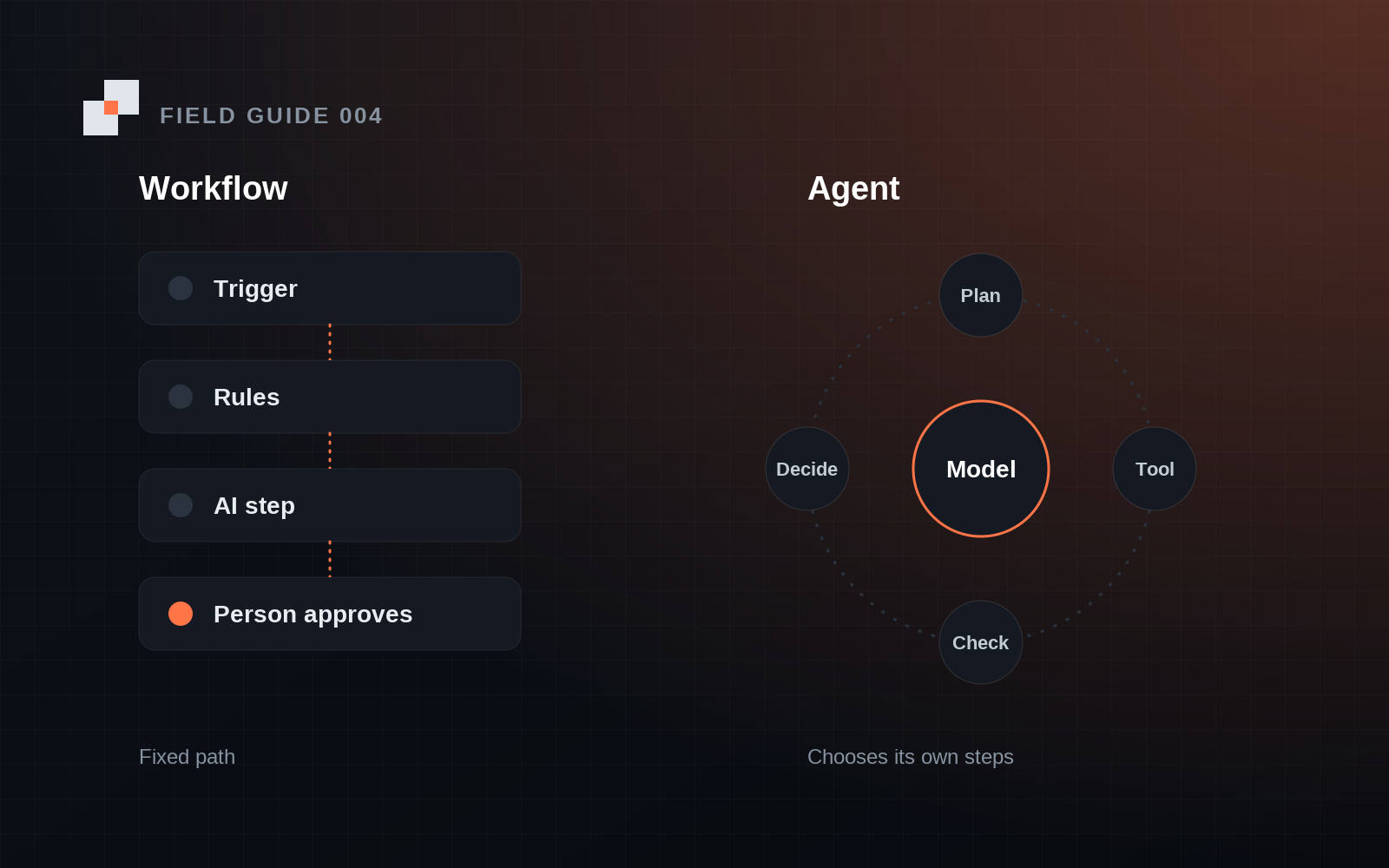
Read the guideNot every problem needs an agent. A plain-English guide to choosing between a workflow and an agent, and why simple usually wins.
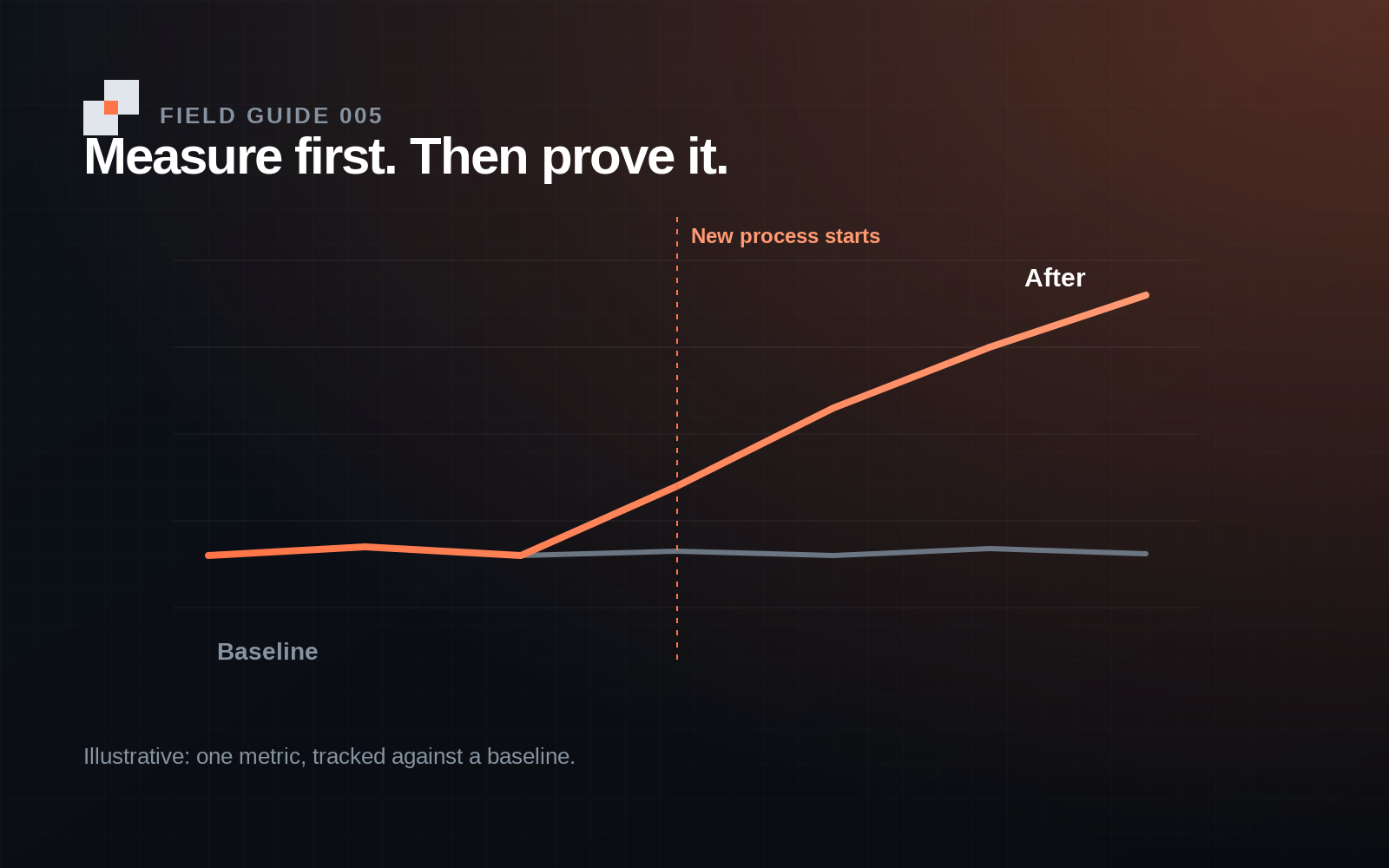
Read the guideA baseline, one metric and a monthly review. A simple method for proving that an AI project paid for itself.
Read the guideAsk us to test how your business shows up in AI answers today.
Test my AI visibility